Steel Detailing vs Structural Detailing: Key Differences Explained
No construction project is successful until it begins before construction crews get on the job site. Each steel beam, connection and support system has an extensive drawing set to direct fabrication and construction. But, many contractors, architects, property owners and even new engineers often tend to mix up steel detailing and structural detailing. The two are closely related, but have different uses during a construction project.
The knowledge of Steel Detailing vs Structural Detailing can assist the project teams in communicating effectively, lessen fabrication mistakes, and hold projects on schedule. Selecting the right detailing service can also help to enhance the coordination between engineers, fabricators, and contractors, as well as reduce rework expenses.
In this guide, we will discuss the difference between Steel Detailing and Structural Detailing, and which of these services your project might need.
What Is Steel Detailing?
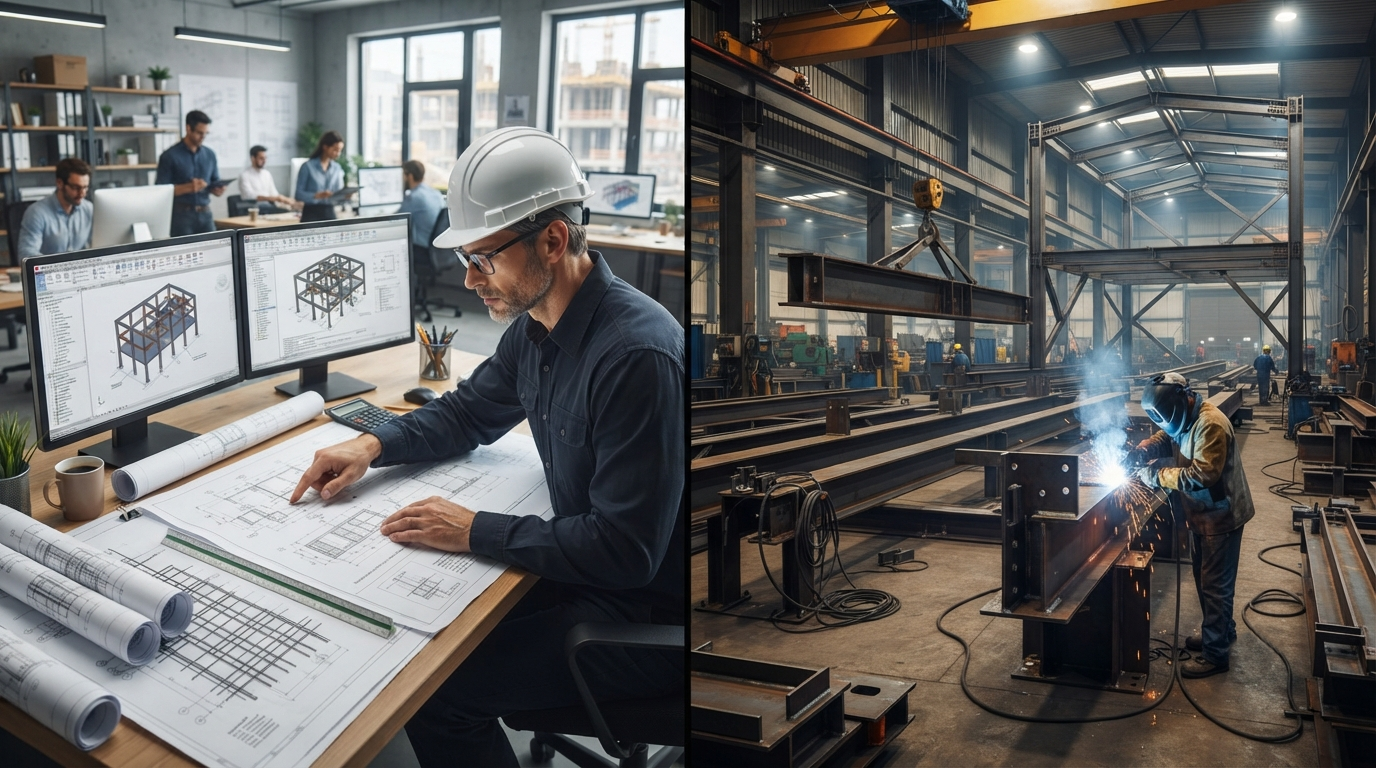
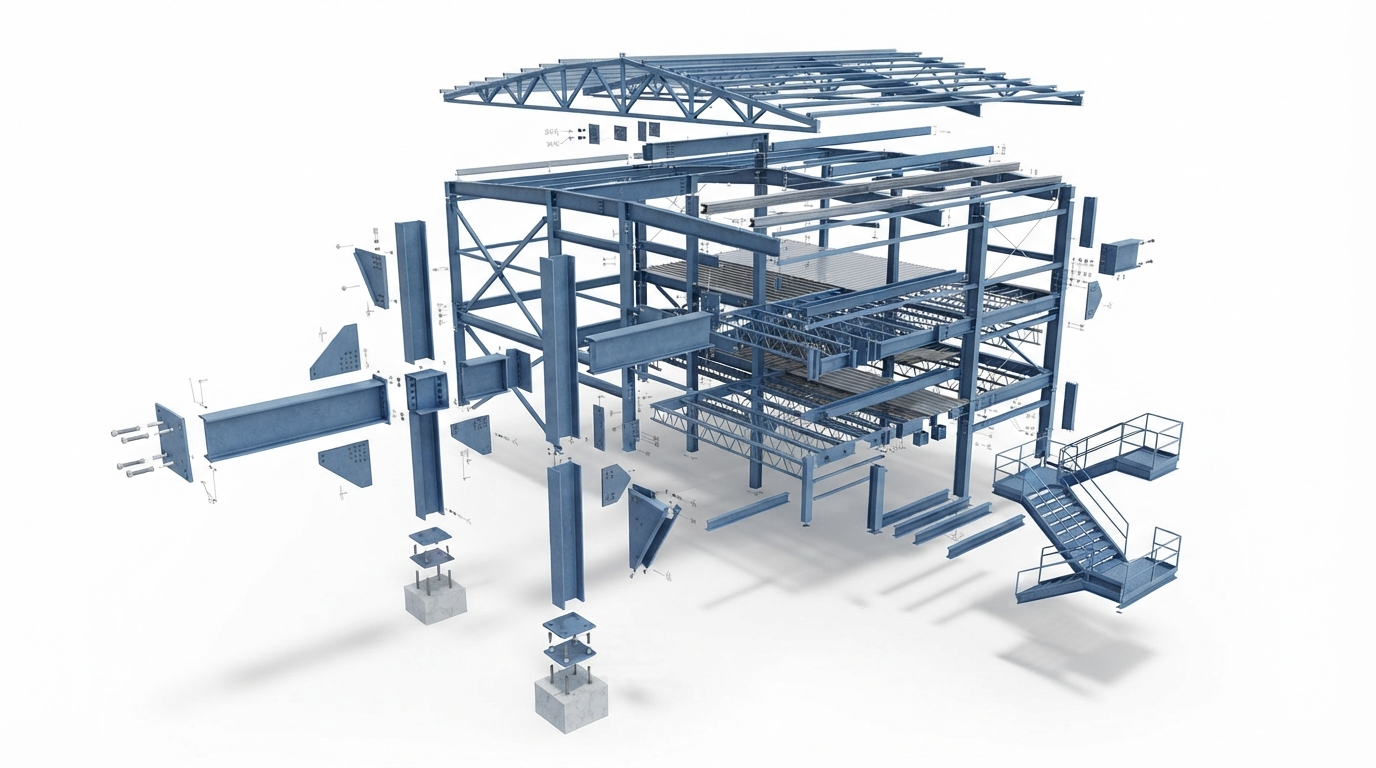
When comparing Steel Detailing vs Structural Detailing, steel detailing involves the development of extremely detailed drawings and documents to fabricate and install steel components. The drawings offer steel fabricators exact details on each steel member, dimensions, hole placement, welds, bolt sizes, materials and assembly instructions.
A steel detailer transforms engineering designs into practical Steel Shop Drawings that manufacturers use to fabricate structural steel accurately.
Typical Steel Detailing Services include:
- Steel shop drawings
- Steel Fabrication Drawings
- Erection drawings
- Bolt and weld specifications
- Material take-offs
- Steel Connection Details
- Assembly drawings
Without accurate steel detailing, fabrication shops may produce incorrect components, leading to delays, increased costs, and installation issues on-site.
What Is Structural Detailing?
In the discussion of Steel Detailing vs Structural Detailing, structural detailing is a wider field of work, which includes the preparation of detailed construction drawings for all structural elements of a building or infrastructure project. Steel Detailing is a specialized type of detailing that deals with fabricated steel and can be combined with structural detailing that includes reinforced concrete, timber, masonry, precast concrete, and structural steel.
These drawings are used to make sure that each structural component fits the engineer’s design, and meets the relevant building codes.
Professional Structural Detailing Services often include:
- Foundation detailing
- Beam and column detailing
- Slab reinforcement layouts
- Structural framing plans
- Reinforcement drawings
- Structural steel layouts
- Construction detailing for multiple structural materials
Because structural detailing covers more than steel alone, it serves as the foundation for coordinating various structural systems throughout a project.
Quick Comparison of Steel Detailing vs Structural Detailing:
The table below summarizes the major differences between Steel Detailing vs Structural Detailing. This format answers one of the most common search queries and is designed to provide a clear, easy-to-scan comparison.
Feature | Steel Detailing | Structural Detailing |
Primary Focus | Fabrication and installation of steel components | Overall detailing of structural systems |
Covers | Structural steel only | Steel, concrete, timber, masonry, precast |
Main Drawings | Steel Shop Drawings and fabrication drawings | Structural engineering drawings and construction drawings |
Used By | Steel fabricators and erectors | Structural engineers, contractors, builders |
Project Stage | Fabrication and erection | Design coordination and construction planning |
Includes Connection Details | Yes | Sometimes, depending on project scope |
Material Coverage | Steel only | Multiple structural materials |
| End Goal | Accurate steel fabrication | Accurate structural construction |
How Steel Detailing and Structural Detailing Differ
Although these services often work together, understanding Steel Detailing vs Structural Detailing is important for anyone involved in construction planning or project management.
1. Scope of Work
The biggest Difference Between Steel Detailing and Structural Detailing lies in their scope. Steel Detailing is dedicated to fabricated steel products. All beams, columns, bracings, plates and connections are recorded with manufacturing level accuracy to meet the AISC stainless steel construction standards.
Structural Detailing deals with the whole structural framework of a project, whereas Structural Engineering focuses on the components of the structure. It covers steel as required, but when it comes to reinforced concrete, foundations, retaining walls, slabs, columns and other load-bearing components, it also covers them.
In other words, steel detailing is a specific type of structural detailing.
2. Purpose of the Drawings
The easiest way to understand the difference between Steel Detailing vs Structural Detailing is to look at the drawings themselves and the purpose they are created for.
Steel detailers produce documents that the fabricators use to produce the structural steel to the exact specifications. All dimensions, bolt location, weld symbol and plate thickness are critical and will govern production.
Structural detailers make drawings, however, which aid in the construction of the building’s structural framework. Their job is to make sure that the parts come together properly and fulfill engineering specifications before manufacturing starts. Both of these sets of drawings are critical but for different audiences and different phases of the construction process.
If you want a more detailed explanation of how these services differ, read our guide on Structural Drawings vs Shop Drawings.
3. Level of Detail
Another significant distinction in Steel Detailing vs Structural Detailing is the amount of fabrication information provided.
Steel detailing includes highly specific manufacturing instructions such as:
- Bolt diameters
- Weld symbols
- Hole spacing
- Plate thicknesses
- Member marks
- Cutting dimensions
- Material grades
These details allow fabrication shops to manufacture components without making assumptions.
Structural detailing typically focuses on structural layouts, reinforcement placement, member sizes, elevations, and construction coordination rather than fabrication-level instructions.
4. Professionals Who Use Them
Each type of detailing supports different professionals throughout a project.
Steel Detailing Services are primarily used by:
- Steel fabricators
- Steel erectors
- Manufacturing shops
- Welding teams
- Quality inspectors
Meanwhile, Structural Detailing Services support:
- Structural engineers
- Architects
- Contractors
- Construction managers
- Building inspectors
Although their responsibilities overlap during project coordination, each group relies on different levels of technical information.
5. Types of Drawings Produced
One of the most noticeable differences in Steel Detailing vs Structural Detailing is the final deliverables.
Steel detailing commonly produces:
- Steel Shop Drawings
- Steel Fabrication Drawings
- Assembly drawings
- Erection drawings
- Steel Connection Details
- Material lists
Structural detailing usually includes:
- Structural framing plans
- Reinforcement detailing
- Foundation drawings
- Structural sections
- Structural elevations
- Structural engineering drawings
These drawing packages work together to ensure every phase of construction progresses accurately and efficiently.
6. Role During Construction
The timing of each service is another important distinction.
Structural detailing generally begins earlier in the project after the structural engineer completes the design. These drawings establish how the building’s structural system will be constructed.
Steel detailing follows after the design has been approved. Detailers convert structural information into fabrication-ready drawings that manufacturers use to produce steel components.
Rather than replacing one another, the two disciplines complement each other throughout the construction process.
7. Accuracy Requirements
Accuracy is critical in every construction project, but the level of precision expected differs when comparing Steel Detailing vs Structural Detailing.
Structural detailers are responsible for the accuracy of the building being built as per the structural engineer’s drawings. They produce drawings to demonstrate the way in which individual structural components interact to keep loads safe and stable.
Steel detailers go a step further with that information. All measurements, hole positions, weld symbols and bolt specifications are critical as fabrication shops are building steel based on these drawings. It can cause delays and extra costs if the parts don’t fit together when they are being installed, even if it’s a minor error. That’s why the more skilled detailers employ advanced software and quality control protocols prior to releasing the fabrication plans.
8. Software Used
When comparing Steel Detailing vs Structural Detailing, both disciplines are BIM and CAD based, but they can be used for different tasks in the software.
Structural Detailing often involves creating structural layouts, reinforcement details, and coordinated construction documentation using programs.
Structural detailing often involves creating structural layouts, reinforcement details, and coordinated construction documentation using CAD and BIM software. These digital tools support every stage of the structural drafting process, helping engineers and drafters produce accurate drawings and reduce the chances of errors before construction begins.
In Steel Detailing, software is used to create Structural Steel Drawing, Connection Details, Bills of Material, and Fabrication Ready Shop Drawing, which are very detailed. These digital workflows enhance coordination and cut down on manual mistakes, and they can help project teams detect clashes before construction starts.
9. Final Deliverables
Another important aspect of Steel Detailing vs Structural Detailing is the type of documentation delivered at the end of each process.
A structural detailing package may include:
- Foundation plans
- Structural framing layouts
- Reinforcement drawings
- Structural sections
- Construction detailing documents
A steel detailing package generally contains:
- Structural Steel Shop Drawings
- Steel Fabrication Drawings
- Assembly drawings
- Erection plans
- Material lists
- Bolt schedules
- Steel Connection Details
These documents provide fabricators and installers with everything needed to manufacture and erect structural steel accurately.
Steel Detailing vs Structural Detailing: Do They Work Together?
Absolutely. One common misconception is that companies choose between the two. In reality, Steel Detailing vs Structural Detailing is not a competition. Most steel construction projects require both services.
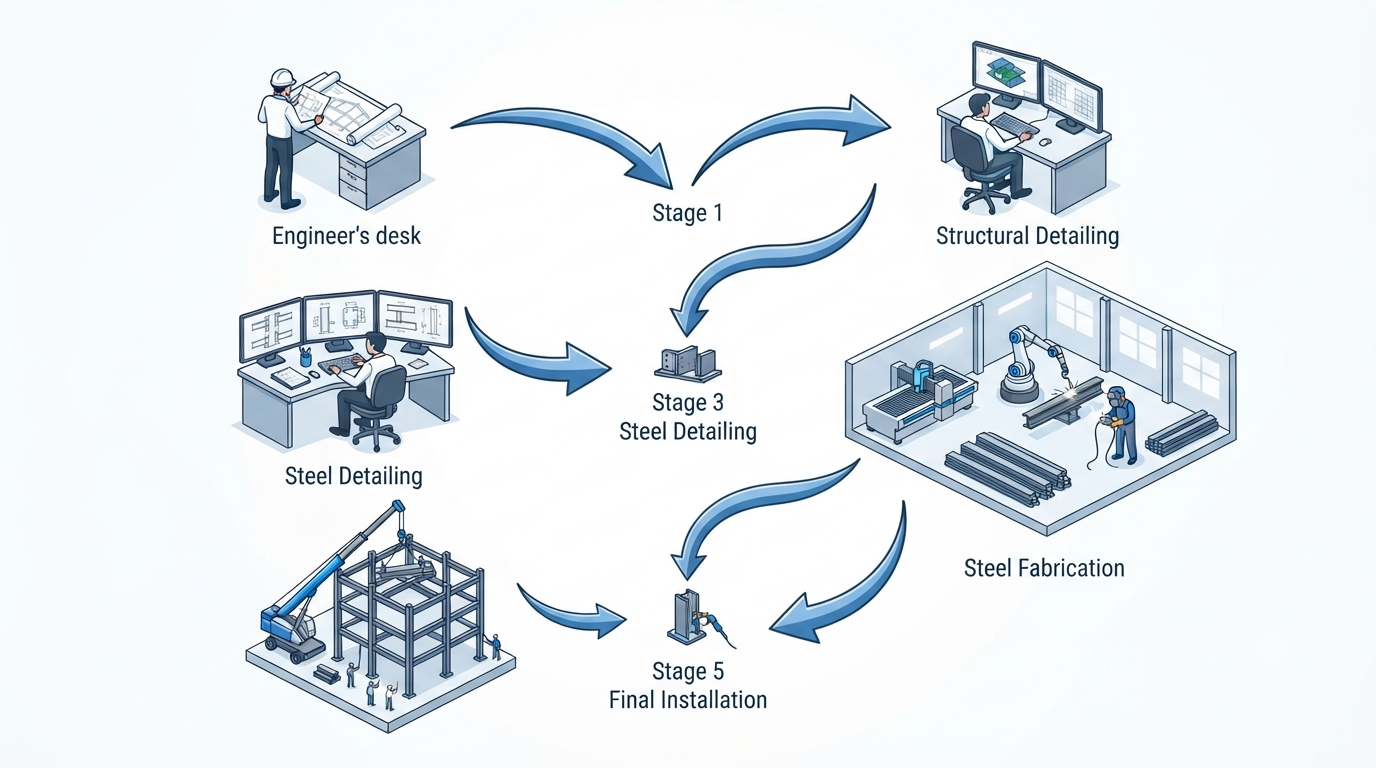
Structural detailing establishes the structural framework based on engineering calculations and design requirements. Once that framework is finalized, steel detailing converts the structural information into fabrication-ready documents.
Think of it this way:
- Structural detailing answers what needs to be built.
- Steel detailing explains how each steel component should be manufactured and assembled.
When both services are coordinated properly, projects move from design to fabrication and installation with fewer delays, fewer revisions, and better overall quality.
When Do You Need Structural Detailing?
Understanding Steel Detailing vs Structural Detailing helps determine when structural detailing services are required. You should consider Structural Detailing Services when your project involves:
- New residential construction
- Commercial buildings
- Industrial facilities
- Bridges and infrastructure
- Concrete structures
- Mixed-material structural systems
- Structural renovations or expansions
These services help contractors understand how the structural framework should be constructed while ensuring compliance with engineering requirements and applicable building codes.
When Do You Need Steel Detailing?
When evaluating Steel Detailing vs Structural Detailing, professional Steel Detailing Services become essential whenever fabricated structural steel is part of the project.
Typical applications include:
- Steel-framed commercial buildings
- Warehouses
- Manufacturing plants
- Distribution centers
- High-rise buildings
- Industrial facilities
- Stadiums
- Steel bridges
Accurate Steel Shop Drawings and Fabrication Drawings help fabricators produce components correctly the first time, reducing waste and preventing installation issues in the field.
Why Accurate Detailing Matters
Whether you’re comparing Steel Detailing vs Structural Detailing for a new construction project or a renovation, the quality of the detailing directly impacts project success.
Well-prepared detailing offers several benefits:
- Fewer fabrication errors
- Better coordination between project teams
- Faster project execution
- Reduced material waste
- Improved installation accuracy
- Lower rework costs
- Improved communication with all parties during construction.
Quality detailing also facilitates better teamwork among the architect, structural engineer, fabricator, contractor and project manager.
All projects are carefully quality assured to be accurate, consistent and meet USA industry requirements. Here companies like Engineering Geni can provide you with everything you need, from detailed Structural Engineering Drawings to Structural Drafting Services and even to fabrication-ready steel drawings, we are dedicated to helping your project succeed.
Conclusion
Understanding Steel Detailing vs Structural Detailing helps project owners, contractors, architects, and engineers make informed decisions during planning and construction. Although the two disciplines are closely connected, they serve different purposes and produce different types of documentation.
The comparison of Steel Detailing vs Structural Detailing shows that structural detailing focuses on the complete structural framework, while steel detailing provides the precise fabrication information needed to manufacture and erect structural steel accurately. Together, they improve coordination, reduce costly mistakes, and keep construction projects moving efficiently.
Frequently Asked Questions
Q: Is steel detailing the same as structural detailing?
Ans: No. When comparing Steel Detailing vs Structural Detailing, structural detailing covers the overall structural system, while steel detailing focuses specifically on fabricating and installing structural steel components.
Q: Which comes first: structural detailing or steel detailing?
Ans: Structural detailing typically comes first because it follows the structural engineer’s approved design. Steel detailing is then developed from those drawings to support fabrication and erection.
Q: What are steel shop drawings?
Ans: Steel Shop Drawings are detailed fabrication documents that include dimensions, welds, bolt locations, material specifications, and assembly information required by steel fabricators.
Q: Can one project require both services?
Ans: Yes. Most commercial and industrial steel projects require both Structural Detailing Services and Steel Detailing Services to ensure successful construction and accurate fabrication.
Q: Why are steel connection details important?
Ans: Steel Connection Details ensure beams, columns, braces, and other structural members are connected safely and correctly, helping maintain structural integrity during construction and throughout the building’s lifespan.