Speed and Strength: The Benefits of Modern Precast Concrete Constructions for Industrial Hubs
Quick expansion of industrial centers is occurring all throughout the United States. Warehouses, factories, logistics hubs, and manufacturing sites have to be erected quickly and constructed robust enough to withstand decades. Business owners don’t like delays. They too dislike dilapidated buildings. Precast Concrete Constructions are revolutionizing things here.
Modern precast concrete buildings provide longevity, strength, and speed. While keeping high safety and durability standards, they enable industrial initiatives to be completed more swiftly.
The following blog will explain how Precast Concrete Constructions function and why they are perfect for industrial centers.
What Are Precast Concrete Constructions?
Precast Concrete Constructions use factory-produced concrete components that are then transported to the building site.
Workers build walls, beams, columns, and slabs in a regulated setting rather than pouring concrete at the site. These pieces are delivered and put like building blocks once they are ready.
This technique departs from conventional building, whereby concrete is poured and dried right on-site.
Why Industrial Hubs Need Faster Construction
Industrial centers run on demanding timelines. Businesses usually want:
- Fast warehouse arrangement
- Rapid factory growth
- quick logistical center construction
Loss of income can come from delays. Modern precast concrete buildings drastically shorten building time when compared to conventional techniques. Since components are produced ahead of time, site preparation and component manufacturing can run concurrently. This saves months or even weeks.
The Key Benefits of Precast Concrete Constructions
Let’s look at the main advantages.
1. Speed of Construction
Speed is among the most important advantages Precast concrete constructions offer.
Weather does not halt output since the components are factory-made. Factory work is unaffected by rain, snow, or excessive heat.
Precast components are rapidly installed with cranes once the site is prepared. This lets industrial centers begin operations sooner.
2. High Strength and Durability
Industrial buildings have to endure great loads, big equipment, and unrelenting action. Precast concrete constructions are renowned for their power.
Factory-controlled manufacture guarantees:
- Right curing
- Good-quality supplies
- Regular strength
This increases structures’ resistance against:
- Strong effect
- Fire
- Bad weather
- wear and tears
Durability is not an option for industrial hubs. Needful.
3. Better Quality Control
Quality in conventional construction relies on the conditions of the site. Results can be influenced by humidity, temperature, and worker skill.
Production of precast concrete constructions takes place in a controlled manufacturing setting. This guarantees:
- Precise calculations
- Reliable standard
- Lower human error
Improved quality translates to fewer future repairs.
4. Cost Savings Over Time
At first, some people considered Precast Concrete Constructions to be costly. Long-term savings, though, seem quite affordable.
Savings result from:
- Speeder project completion
- Reduced labor expenses
- Less stuff waste
- Lower upkeep
Lower running costs help industrial center owners over time.
5. Improved Safety
Construction areas may be hazardous. Conventional concrete pouring calls for extensive hand effort and extended on-site work hours.
Precast Concrete Constructions call for a factory to handle much of the work off-site. This improves employee safety and lowers on-site risks.
Less on-site activity translates into less accidents.
6. Environmental Benefits
Modern U.S. building projects depend on sustainability.
Precast concrete constructions encourage green building approaches as:
- Material waste is reduced
- Factories regulate energy consumption
- Parts can be reused
Numerous industrial centers seek eco-friendly certifications. Precast systems assist one to reach such objectives.
7. Flexibility in Design
Precast, some contend, stifles innovation. That is not accurate. Modern Precast concrete constructions let one be flexible in:
- Surface texture of a wall
- Shapes structural
- Design of Structures
- Plans of growth
Adding fresh precast segments allows industrial centers to quickly grow.
Why Precast Is Ideal for Industrial Hubs
Industrial centers need:
- Large, unfettered areas
- Powerful structural systems
- Rapid build out dates
- Low upkeep expenses
Precast concrete structures meet all these requirements. Open interiors free from too many supporting columns are made possible by huge clear-span precast beams. This simplifies the movement of products and the installation of heavy equipment. Precast materials’ strength also helps heavy storage racks and equipment loads.
Comparing Precast and Traditional Concrete
| Feature | Precast Concrete | Traditional Concrete |
| Construction Speed | Fast | Slower |
| Quality Control | Factory-Controlled | Site-Dependent |
| Weather Impact | Minimal | High |
| Labor Requirement | Lower | Higher |
| Durability | High | Moderate |
This comparison shows why many industrial developers choose Precast Concrete Constructions.
Long-Term Performance and Maintenance
Business profitability might be impacted by maintenance expenses. Because precast concrete constructions are crack-resistant and damage-resistant, they need less maintenance.
The disciplined manufacturing method lessens flaws. This lowers maintenance costs and lengthens building life. For industrial centers running 24/7, this dependability is quite critical.
Conclusion
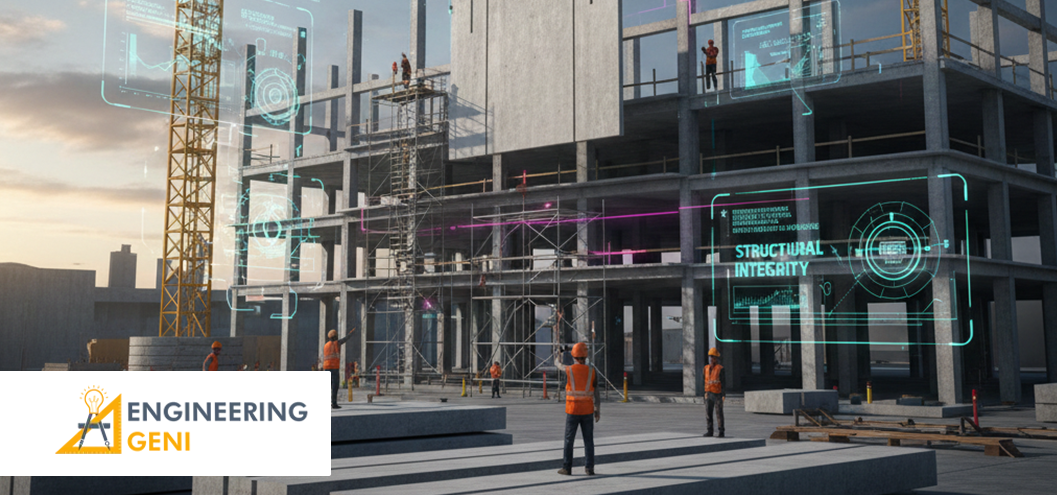
Industrial hubs need buildings that are strong, reliable, and built quickly. Modern Precast Concrete Constructions provide the perfect solution. They combine speed, strength, safety, and long-term cost savings. From factory production to on-site assembly, precast systems improve efficiency at every stage.
If you are planning an industrial project in the USA, now is the time to choose smarter construction methods.
Contact Engineering Geni today to explore high-quality Precast Concrete Constructions solutions and build your industrial hub with confidence.
FAQs:
Q: What defines precast concrete constructions?
Ans: Precast concrete buildings are built on-site with factory-made concrete elements.
Q: For industrial structures, are precast concrete structures sufficiently durable?
Ans: Yes. Designed to bear large weights and industrial activities, they are very strong.
Q: Do precast concrete constructions help project time?
Ans: Yes. Installation is far quicker than conventional building because components are premanufactured.
Q: Are Precast Concrete Structures environmentally friendly?
Ans: Yes. They help to promote sustainable construction methods and lower material waste.
Q: Can industrial buildings be expanded using precast systems?
Ans: Yes. Precast structures are flexible and allow easy expansion in the future.