
Avoiding Project Chaos: The Construction Project Management Guide for First-Time Builder
The excitement of constructing your very first home or commercial building is offset by the sometimes overwhelming feeling it generates. The entire process involves several factors such as budgets and timelines, schedules and communication, etc. Even a simple project can become a source of chaos and delays without proper planning. Therefore, effective construction project management is necessary to ensure a smooth and stress-free building process.
This guide provides a breakdown of each important step through clear and easy language, so first-time builders in the USA will know exactly how to remain in control. This guide is applicable for any type of project whether it is a small remodel or a brand-new building.
Introduction: The Top Challenges Faced by New Construction Projects
The initiation of a construction project for one’s self not only brings challenges but a wide range of those that are beyond the imagination of the novice builders. Poor planning, miscommunication, material mis-ordering, and timelines that can’t be met are all reasons why many projects fail. This is the reason why construction project management has such a strong influence. It eliminates uncertainty in the entire process.
The main issue from the start of the project is the construction scheduling. A weak or unrealistic schedule means the end of the world for the project and everything else that is related to it. Late materials are the same as idle labor, increased costs, and missed deadlines. It is a common thing for most first-time builders to not understand how much money can be saved through careful scheduling. Good planning means you will know exactly what takes place every week, who is accountable, and how progress will be evaluated.
Using the right construction project management methods, a novice builder can remain serene, assured, and totally in command of his or her project.
Key Project Management Tools: Gantt Charts, Schedules, and Communication Plans
Strong tools keep every successful project organized. You certainly do not have to be a construction professional to use them intelligently. These tools merely provide you with an overview of the work and allow you to monitor the progress.
Gantt Charts
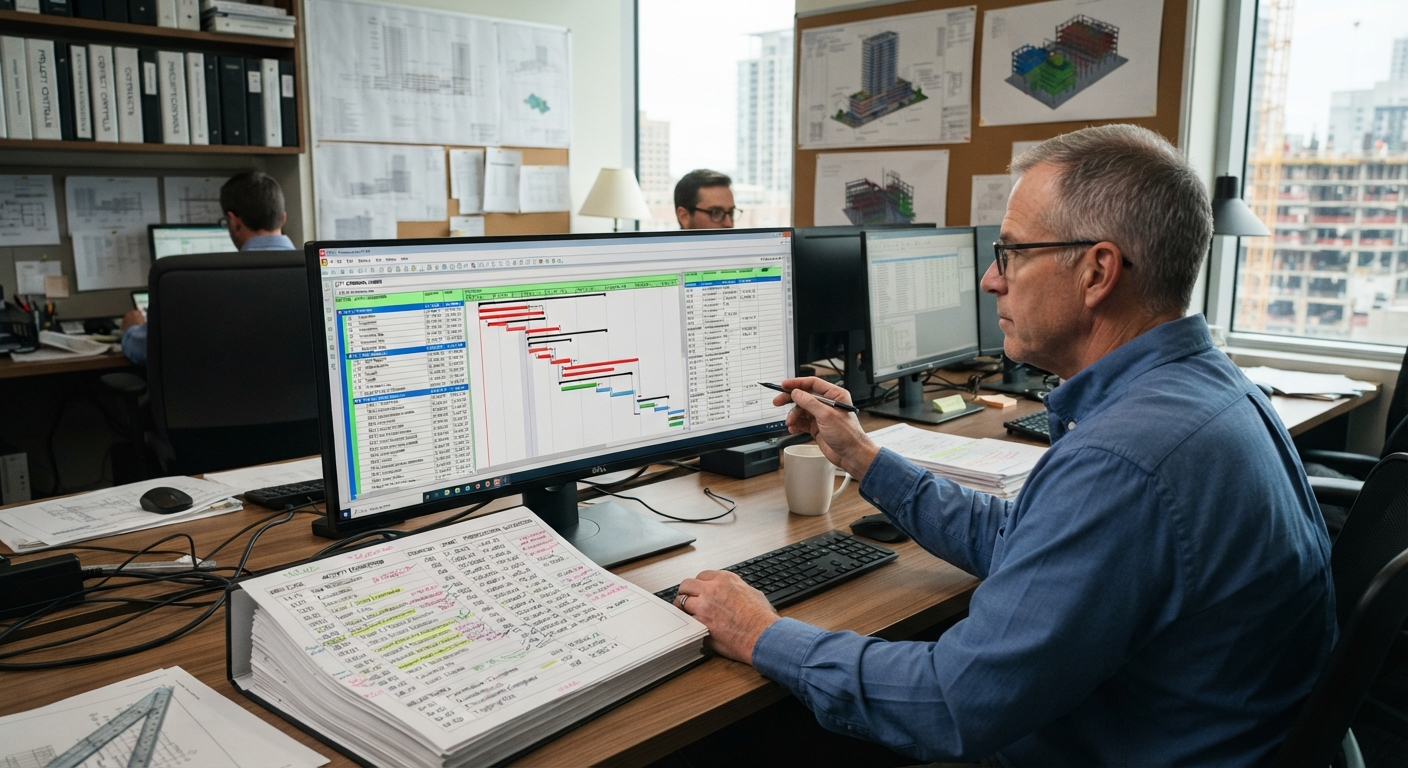
Gantt chart is like a calendar showing all activities of the scheduling manner. It provides the following information:
- Which activities start first
- The duration of each activity
- Dependency of activities on each other
- What is delayed and what is on time
Gantt charts are applied by USA builders on a daily basis in the field of building construction project management as they bring about a complete understanding of the situation.
Detailed Schedules
Making the schedules clear to everyone is the main task of the schedules which is simply a calendar for contractors, suppliers, inspectors, and owners to know the timeline. An effective schedule consists of:
- Beginning and ending dates
- Holidays
- Deliveries
- Rescheduling due to weather
- Milestones
The schedules are the core of every construction project management plan.
Communication Plans
This simple tool saves more time than anything else. A communication plan answers questions such as:
- Who updates the client?
- How often will updates be shared?
- What happens if a problem occurs?
Clear communication reduces surprises, increases trust, and makes your project run smoothly.
Working With Your Project Manager: How to Be an Effective Client
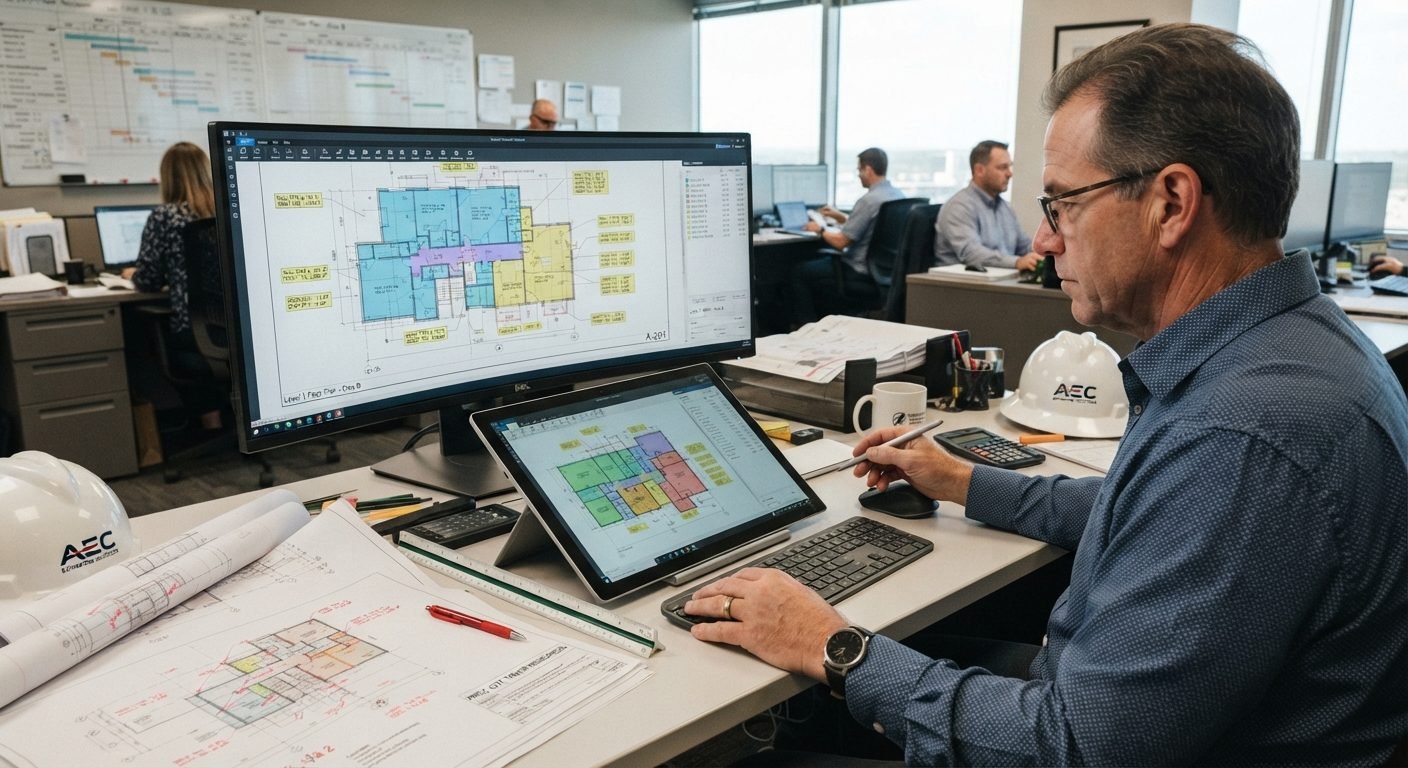
A project manager with great skills is the strength of every construction site. However, your participation as a customer is equally essential. The project if worked on as a team gets ahead with less delay and stress.
Let me share with you how you can be a good client in construction project management:
1: Be Clear With Your Vision
It is very important to be clear with what you want and thus communicate details at the very beginning such as layouts, design ideas, budget or materials you would like to use to avoid future problems. A clear vision assists your manager in drafting powerful plans that eliminate the need for rework afterward.
2: Don’t Hesitate to Ask Questions
You should not be afraid. It is your project, and thus you have the right to know everything. The project managers who are good at what they do will make things understandable and will give you the realm to make your own smart choices.
3: Make Your Decisions in Time
Your fast approvals are what keep the overall construction project management process going. Delays in decision-making usually lead to delays in the actual construction process.
4: Honor the Process
Have faith in your project manager’s knowledge. He/she deals with people, timelines, machinery, and inspections. Your role is to keep updated and make decisions, not to control the daily site functions.
When the clients and the project managers adopt the partnership approach, the results are faster, smoother, and more cost-efficient.
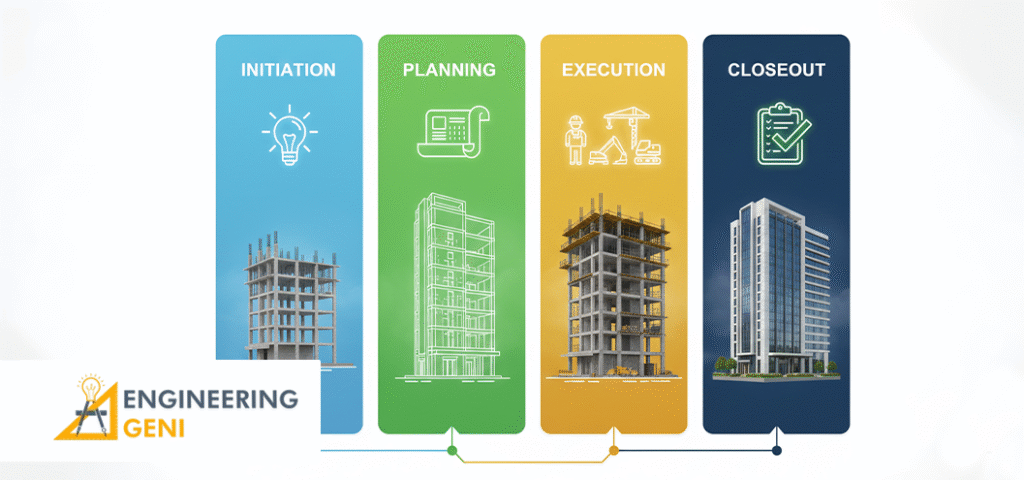
The Project Lifecycle: A Breakdown of Initiation, Planning, Execution, and Closeout
Every project adheres to a set path called the construction project management lifecycle. Understanding this cycle enables first-time builders to know exactly what to anticipate.
1: Starting
This is where ideas transform into a concrete strategy. You define:
- Project objectives
- Budget projections
- Land or property information
- High level aspirations
Good beginnings enable the team for better construction project management with clear vision right from the start.
2: Preparing
Your project manager draws the roadmap here; preparation includes:
- Comprehensive timetables
- gantt charts
- Communication Strategies
- Labor scheduling
- Safe planning
- list of materials
Although it stops 90% of future problems, planning is the most laborious and most thorough stage of building project management.
3: Execution
This is the action phase; the building starts now! Materials are installed, inspections are done, and the structure starts to form as employees come on-site.
Your project manager oversees everything in real time so:
- Keep projects on track
- Handle local challenges.
- preserve safety norms
- Arrange contractors
- Management of quality
Good construction project management for building systems operating in the background is critical for strong execution.
4: Closeout
This last stage comprises:
- Final checks
- finishing of punch list
- assurance and paperwork
- Last walk-through
The team hands over the structure to you after first making sure it satisfies all criteria. You feel more self-assured and in charge throughout your whole construction process if you know all four phases and manage construction projects effectively.
Conclusion: A Smooth Project Is No Accident
Good construction projects do not arise by chance. They are the product of deliberate planning, great leadership, concise communication, and top-notch construction project management.
Knowing Gantt charts, pledging to excellent communication, and adhering to a defined lifecycle help you lower stress and avoid errors. Most importantly, correct building project planning ensures that your project is completed on time and within budget.
First-time builders in the United States stand all the difference by cooperating with a knowledgeable team. Your project will progress from confusion to clarity and from conception to reality without pointless difficulty with the best companies such as Engineering Geni assisting you.
FAQ:
Q: For first-time builders, why is building project management so essential?
Ans: Because it guarantees every stage adheres to a clear plan, keeps your project orderly, avoids delays, controls expenditures, and so on.
Q: Which tools help manage construction projects?
Ans: Most American businesses use Gantt charts, schedules, communication strategies, and digital tracking tools.
Q: How long does building planning take?
Ans: Though it depends on project size, typically detailed scheduling takes a few days to several weeks.
Q: How does a project manager spend the construction?
Ans: Tracking results, solving problems, materials management, worker coordination, and communication with you define them.
Q: Could improved scheduling help to shorten project timelines?
Ans: Yes. Effective construction project scheduling keeps contractors coordinated, prevents overlaps, and avoids material shortages.